
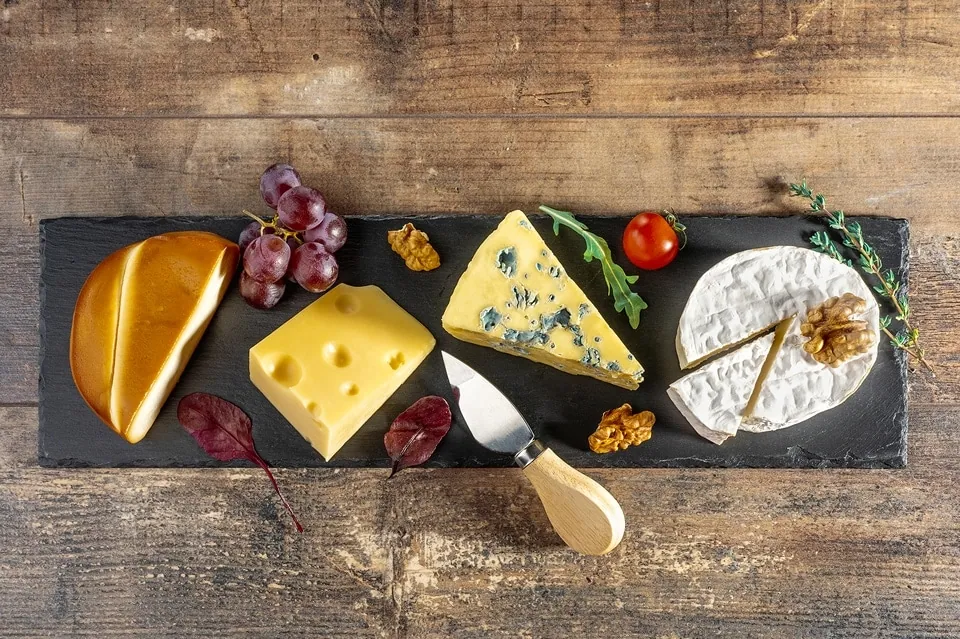
You might be wondering if following a low FODMAP diet means giving up your love of cheese. While many dairy products are high FODMAP, cheese isn’t automatically excluded from a low FODMAP diet.
Here is a list of low FODMAP cheese you can continue to enjoy, along with information on how to identify FODMAP-friendly cheeses on your own and use them in your kitchen.
Choosing Low FODMAP Cheese

Lactose is essentially milk sugar, which is a FODMAP. This leads many to believe that all dairy foods are high FODMAP simply because they contain some level of lactose. The reality is that this isn’t always the case.
Some dairy foods are higher in lactose and FODMAPs than others. Milk, for example, has a high lactose content, making it unsuitable for a low FODMAP diet, but there are plenty of lactose free milk options. Consuming high lactose (and high FODMAP) foods can lead to an excess of lactic acid in your body during the digestion process.
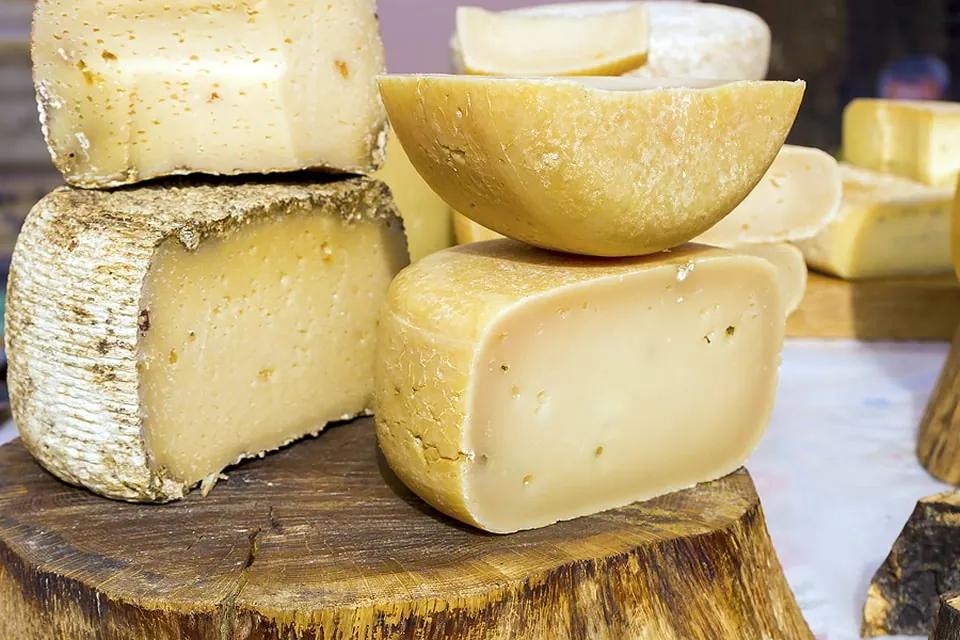
Cheeses are very different from milk, even if they’re both dairy products. The lactose content in cheese varies depending on how the cheese is processed and aged. Cheeses that are aged naturally have a lower lactose level and are tolerated by most people who follow a low FODMAP diet.
Before we go into detail about which cheeses are low FODMAP and which are not, you need to know how to identify low FODMAP cheese on your own, even if you don’t have this list at hand.
Identifying Lactose in Cheese
When you look at the nutrition label on cheese, it doesn’t tell you how much lactose it has, but it will tell you how much sugar is present in each serving. Unless a cheese has been flavored, as is often the case with cheese spreads and cream cheese, the only sugar in cheese is lactose.
You can identify a low FODMAP cheese simply by looking at the grams of sugar per serving.
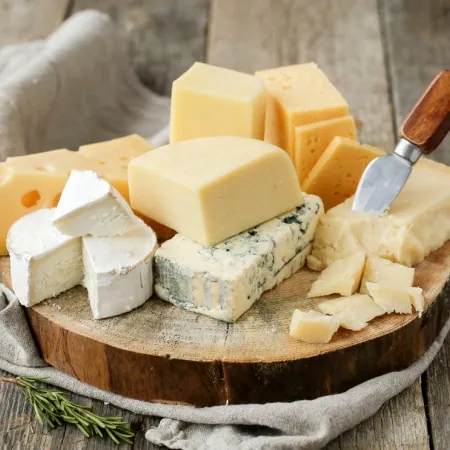
Hard, naturally-aged cheese usually has negligible amounts of sugar, 0.5g or less per serving. This makes them naturally low lactose cheeses.
Fresh, unripened cheeses usually have around 5g of sugar or less per serving. This is the threshold for the low FODMAP diet. At 5g of sugar per serving, the cheese is still considered a low FODMAP food, but you want to be strict about adhering to portion sizes. Cheeses in the 5g of sugar range are considered moderate FODMAP foods.
Any cheese that is higher than this, especially cheese that has added ingredients and flavorings that drive up the sugar content, needs to be avoided on the low FODMAP diet. Processed cheese foods tend to be higher in FODMAPs too.
Getting familiar with the nutrition label on cheese products is the best way to navigate a low FODMAP diet and lactose intolerance.
Low FODMAP Cheese List
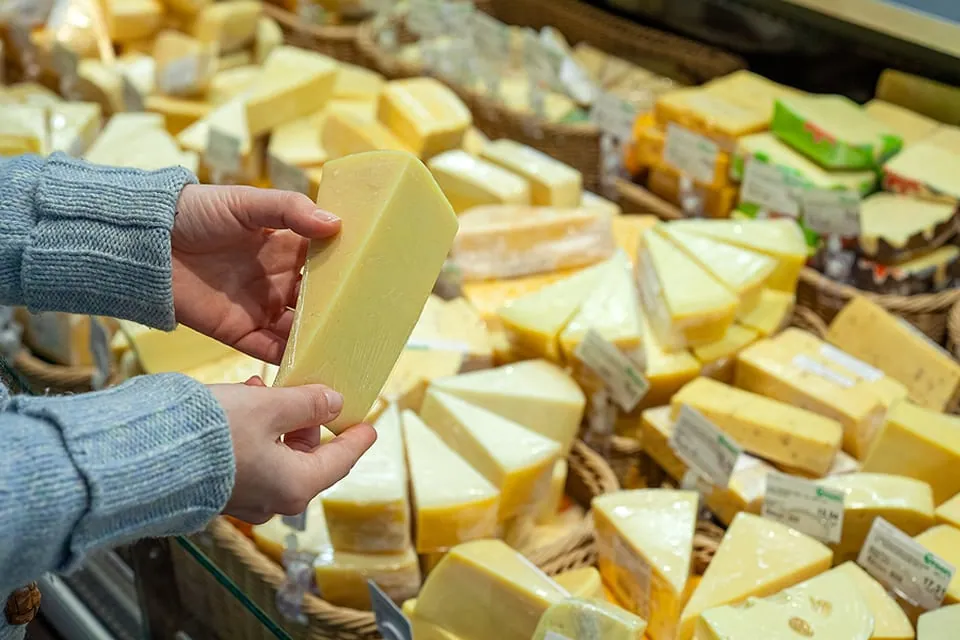
Low-FODMAP Cheeses
These cheeses are approved for the low FODMAP diet. The lactose content listed is for a 40g serving, or just under 1.5 ounces. Also note that with the variety of cheeses available, this list is not exhaustive.
You’ll notice that aged cheese makes up much of the list, which is no coincidence. The aging process of cheese has a major impact on its FODMAP status. Checking labels will open up a world of cheese options for you.
CHEESE | LACTOSE | NOTES |
Blue Cheese | 0.5g or less | |
Brie | 0.1g – 0.46g | |
Camembert | 0.1g – 0.46g | |
Cheddar | 0.1g -.48g | |
Cheshire | negligible | |
Colby | 0.1g – 0.49g | |
Cottage Cheese | 1.9g – 2.67g | Always check the label with cream cheese and avoid any products with fruit added. |
Cream Cheese | 2.5g – 3.76 g | Always check the label, especially if flavored or a “light” variety |
Edam | 1.43g or less | |
Feta | 0.1g – 4.09g | Lactose content varies due to processing procedures. Always check the label before purchasing or consuming. |
Gouda | 2.22g or less | |
Haloumi | 1.8g | |
Havarti | 0.1g | |
Manchengo | 0.1g | |
Monterey Jack | 0.1g | |
Mozzarella | 0.1g -1.0g | |
Parmsesan | negligible | |
Pecorino | 0.2g | |
Queso Fresco | 2.98g | |
Ricotta | 0.27g – 2.0g | |
Romano | 0.2g – 0.73g | |
Swiss | 0.1g or less |
Cheese To Enjoy in Moderation
Certain cheeses on this list are okay, but only in moderation. These are sometimes called moderate fodmap cheese because it’s okay in a small, low FODMAP serving, but you have to be aware of how much you’re eating.
Some popular cheeses with moderate FODMAPs:
- Cream Cheese
- Haloumi
- Edam
- Gouda
Other cheeses, like Feta cheese, goat cheese, mozzarella cheese, and cottage cheese, can vary quite a bit depending on the cheese-making process. That’s why it’s so important to read each cheese label carefully. Don’t be fooled into thinking every cheese that’s marketed towards customers with lactose intolerance is automatically low FODMAP, either.
Cheese To Skip on a Low FODMAP Diet
Thankfully, most cheeses can fit into a low FODMAP diet with the right serving sizes. There aren’t any cheeses you have to avoid entirely, but some are more likely to be high FODMAP than others.
Rich, creamy cheeses are the main culprit. Think ricotta, paneer, and quark cheese. Cheeses made from buttermilk or kefir are also more likely to be high FODMAP. Additionally, you should avoid cheeses flavored with high FODMAP ingredients like garlic and onion.
What About Vegan Cheese?
If you lead a dairy free diet by choice or because you’re completely dairy intolerant, you’re likely wondering if vegan cheese is a safe option. Unfortunately, this is another area where it’s hard to give a clear answer. Vegan cheese can be made in a variety of ways, and the ingredients used will determine if it’s high or low FODMAP.
Vegan cheeses made with cashews or pea protein should always be avoided, as well as those flavored with high FODMAP ingredients. These items are fine for a dairy free diet, but they’re not low FODMAP.
Making Low FODMAP Cheeses Work In Your Kitchen
If you’re used to purchasing high FODMAP cheeses and other dairy products, making the switch can be challenging, but you’ll get the hang of it in no time! Start by getting comfortable with low FODMAP serving sizes and reading nutrition labels. Once you’ve mastered that, you can start getting creative in the kitchen.
Reinventing your favorite recipes to work with low FODMAP cheeses takes a little creativity but doesn’t have to negatively impact the final taste or texture of the dish. Melting natural cheese that is low FODMAP until it reaches a creamy consistency is an easy replacement for high FODMAP ricotta.
Some items are as simple as purchasing a different version of the same product. Lactose-free cottage cheese is a great example of this. It tastes identical but won’t disrupt your low FODMAP diet. These products can usually be found right next to other lactose-containing products at the grocery store.
FAQs
Is cheese FODMAP Friendly?
Contrary to popular belief, many kinds of cheese are FODMAP friendly. Avoid cheese that contains more than 5g of sugar per serving, especially cheese spreads that are flavored.
Is cheese bad for IBS sufferers?
Many people with IBS that follow a low FODMAP diet can tolerate the low FODMAP cheeses listed above in moderation. Some people with IBS may also be lactose intolerant and unable to tolerate even the smallest amount of lactose. If cheese causes any uncomfortable symptoms, it should be avoided.
What cheeses are low FODMAP?
Generally speaking, cheeses that are hard and aged are more FODMAP friendly. It’s always a good idea to check the sugar content of cheese before allowing it on your low FODMAP diet.
Is cream cheese low FODMAP?
Plain, regular cream cheese is considered low to moderate low FODMAP. It’s low FODMAP at a portion size of 2 tablespoons. It’s also one of those cheeses that’s easy to overconsume. At 80g, cream cheese is considered to be a moderate FODMAP food. Avoid flavored cream cheeses that have added sugars.
Bottom Line
Low FODMAP cheese is a healthy and delicious addition to your low FODMAP diet. The portion size is key, but there are many kinds of cheese that you can enjoy in moderation while living a low FODMAP lifestyle. The next time someone passes the cheese tray, don’t be afraid to indulge in a little nibble.